Exploring DevOps: Transforming Software Creation
Understanding DevOps

I am a 4th-year Computer Science Engineering undergrad and an enthusiast in Cloud and DevOps
What is DevOps :
The desire to make software development faster and smoother created the DevOps philosophy.
It helps Development and Operations teams collaborate for better work.
As making software got harder, it became clear that teamwork between development and operations teams was crucial for efficiency.
DevOps Philosophy has become a mainstream approach to software development nowadays.
It's all about automating, keeping things continuous, and changing things quickly to match the fast digital world.
Traditional Development Process :
Before DevOps, software creation was a bit tricky.
There were issues like :
slow software deliveries,
teams working separately,
lots of manual work without automation,
little oversight of the process,
high costs,
less room for new ideas, and not enough focus on security.
All of this made the process less efficient and sometimes risky
How does DevOps make a Difference?
DevOps aims for quicker software development and ensures non-stop delivery of top-quality software.
It does this by bringing in automation and enhancing teamwork and communication among software developers, quality assurance, and IT operations teams.
DevOps aims to simplify and cut down the cost of software development. By automating repetitive tasks, teams can focus on crucial tasks like coding and troubleshooting, reducing time spent on routine jobs.
This is different from old ways of working that were slower and less efficient.
Essential Tools in DevOps :
In DevOps, some important tools make things easier. They are:
Git:

- Helps in tracking changes in code and collaborating on software development.'
Docker:

- Allows packaging software into containers for consistent deployment.
Kubernetes:

- Manages and orchestrates containerized applications, making scaling and deployment easier.
Jenkins/CircleCI:

- Automates the building, testing, and delivery of software, ensuring continuous integration.
Terraform:

- Automates the provisioning of infrastructure, enabling easy management of resources.
Ansible:

- Automates configuration management and deployment, making the process more efficient.
Prometheus:

- Monitors and provides metrics on systems and services, ensuring better observability.
DevOps Life Cycle :
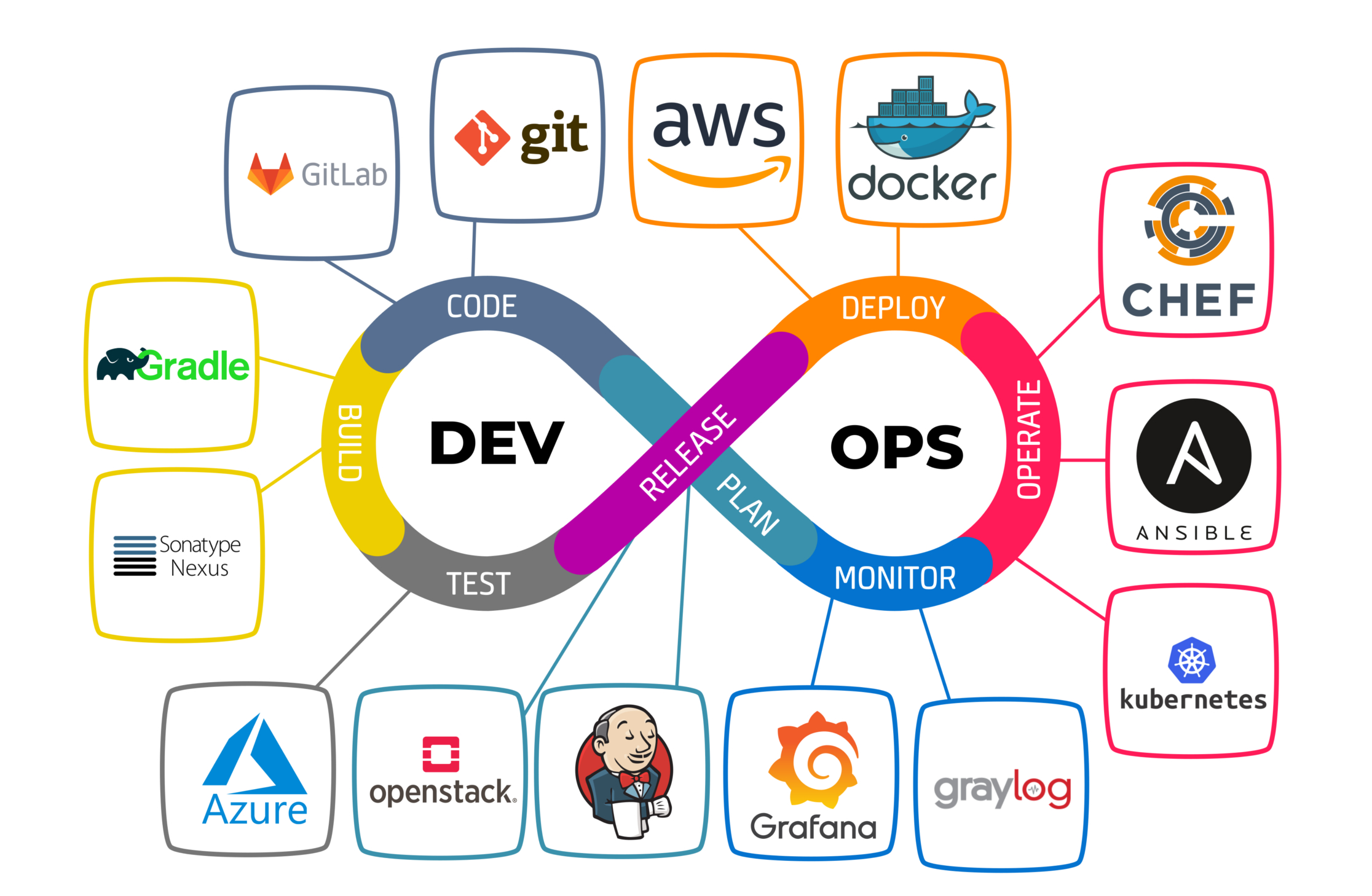
DevOps's endless cycle keeps the software updated and strong:
Code: Developers write and modify code for new features or fixes.
Build: Software is constructed.
Test: The software is tested thoroughly for quality and performance.
Release: Approved, tested software is made available for use.
Deploy: Software is set up and launched for users.
Operate: The software is actively used and maintained.
Monitor: Continuous observation for performance and issues.
Plan: Feedback is used to plan the next cycle for improvements.
Customizing DevOps for Organisations :
DevOps is flexible and can be tailored according to the needs of the Organisations .
This process of adapting to the DevOps philosophy might Involve :
Tool Selection: Choosing tools that suit specific workflows and goals.
Workflow Design: Tailoring processes to fit unique requirements.
Culture Shift: Adjusting teamwork and communication styles to match the organization's dynamics.
Scalability: Adapting the DevOps process to suit smaller or larger teams.
Continuous Improvement: Evolving and optimizing based on the organization's feedback and evolving needs.
Modern Trends :
DevSecOps :
- In software development today, there's a growing emphasis on DevSecOps, a method that merges security with DevOps from the very beginning, recognizing its vital role in the process.
Cloud Native :
Cloud-Native DevOps is the new wave in DevOps, all about using cloud services to make development easier.
It includes microservices, serverless tech, and other cloud-based tools.


